How to Run an Effective Meeting: Agenda, Timebox, Decisions
Run meetings that end in decisions: a copy-ready agenda with times, three clear roles, a parking lot for side topics and a five-minute recap.

In short: a meeting is worth holding when people need to talk in order to decide something or solve a problem. Give it a purpose written as an outcome, an agenda with a goal and a time for every item, and three roles: chair, note-taker and timekeeper. Keep to the clock, park side topics, say every decision out loud, and send short minutes the same day.

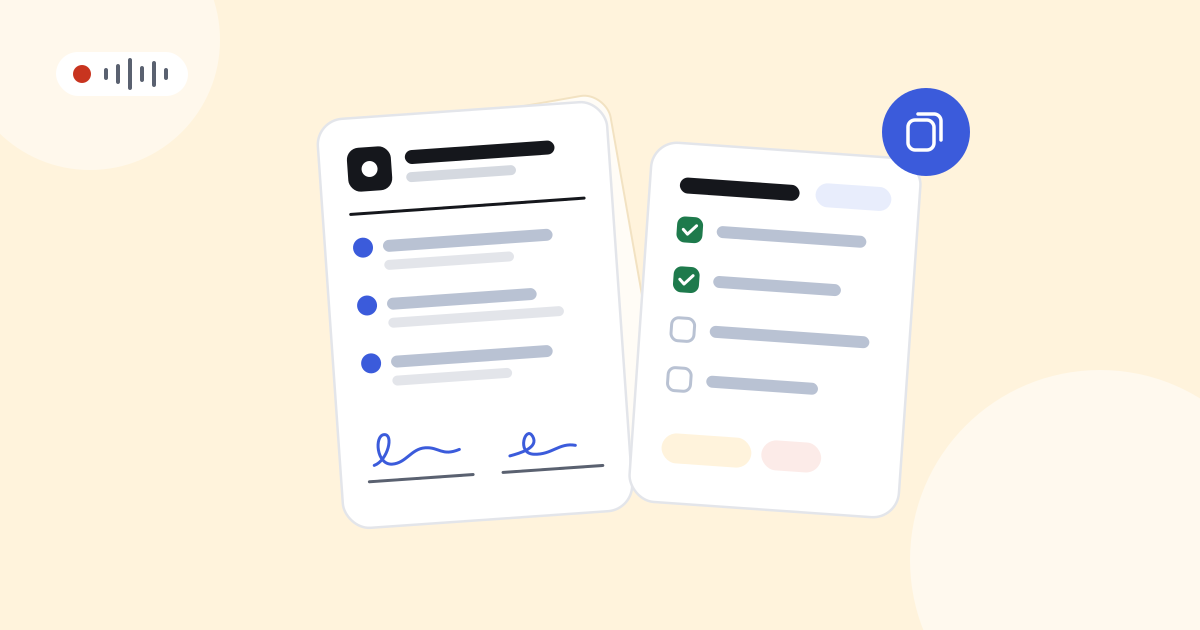
The picture above is the whole guide in one line: plan, talk within a time limit, decide, recap out loud, follow up. Side topics go to a parking lot instead of hijacking the discussion. The sections below walk through each step, with an agenda you can copy and the phrases that keep a meeting on track.
First, check whether you need a meeting
Not every topic needs people in one room at the same time. Ask one question before you send an invitation: what should be different when the meeting ends? If the honest answer is "everyone will know X", a message or a short document usually does the job better.
| Situation | Better format |
|---|---|
| An update nobody needs to discuss | A written update people read in their own time |
| One clear question for one or two people | A direct message or a quick call |
| A choice with options, trade-offs or disagreement | A meeting |
| A problem nobody can solve alone | A meeting |
| A sensitive conversation, such as feedback or conflict | A meeting, small and private |
If you decide to meet, the rest of this guide helps the time count.
Write the purpose as an outcome
"Discuss the website" is a topic. "Choose the new homepage layout and agree who writes the copy" is an outcome. The second version tells people what to prepare, who has to be there, and when the meeting is done.
Label every agenda item with one of three goals:
- Inform: someone shares news; questions only. Keep these short, or send them in writing.
- Discuss: collect ideas or views; no decision is expected today.
- Decide: the item ends with a decision, and the agenda says who makes it.
When people know an item ends in a decision, they arrive with facts instead of first reactions.
Build an agenda with a time for every item
Put the items that need a decision early, while people are fresh. Give each one a lead, a time and any reading. Then add time for the recap at the end. That part is not optional.
Copy this agenda and fill in the brackets:
- Meeting: [name]
- Date and time: [day, start to end]
- Place or link: [room or video link]
- Purpose: [one sentence, written as an outcome]
- Attendees: [names]
- Roles: chair [name], note-taker [name], timekeeper [name]
- Read before: [documents or links]
| Item | Goal | Lead | Time |
|---|---|---|---|
| [first item] | Decide | [name] | 15 min |
| [second item] | Discuss | [name] | 15 min |
| [third item] | Inform | [name] | 5 min |
| Recap: decisions, action items, parking lot | Chair | 5 min |
Here is the same template filled in for a parents' committee planning a school fundraiser in 45 minutes:
| Item | Goal | Lead | Time |
|---|---|---|---|
| Pick the date from two possible Saturdays | Decide | Chair | 10 min |
| Venue: school hall or sports field, with costs | Decide | Treasurer | 15 min |
| Ideas for stalls and games | Discuss | Everyone | 10 min |
| Update on the permit request | Inform | Secretary | 5 min |
| Recap | Chair | 5 min |
Send the agenda with the invitation, or at least a day before, together with anything people should read. A short agenda that arrives early beats a perfect one that appears when the meeting starts.
Invite the right people, and only them
For each item, ask who has to be in the room:
- the person who can make the decision;
- the people who hold the facts the decision depends on;
- the people who will do the work afterwards.
Everyone else can read the minutes. If someone is needed for one item only, put that item first and let them leave after it. A smaller group talks more openly and finishes faster.
Give three roles to three people
| Role | What they do |
|---|---|
| Chair | Opens with the purpose, keeps the discussion on the current item, invites quieter people in, summarises, and calls for the decision. |
| Note-taker | Records decisions, action items and open questions, and reads a decision back when its wording matters. See what a minute taker does before, during and after a meeting. |
| Timekeeper | Watches the time for each item and gives a quiet signal a couple of minutes before it runs out. |
In a small meeting one person can hold two roles, but try not to make the chair the note-taker as well. Leading a discussion and writing it down at the same moment means one of the two suffers.
During the meeting: timebox and keep a parking lot
Start on time, even if someone is late. Open in under two minutes: the purpose, the end time, the agenda, and how decisions will be made (the chair decides, the group agrees, or a vote).
When the time for an item runs out, the chair chooses one of three options out loud:
- Decide now with what we know.
- Extend by a few agreed minutes, taken from a later item.
- Stop here and give the open question to one person, who comes back with an answer.
Side topics will come up. Instead of chasing them or cutting people off, write them on a parking lot: a visible list on the whiteboard or in the shared notes. In the recap, every parked point gets one of three outcomes: it goes on the next agenda, someone owns the follow-up, or the group drops it.
Phrases that help the chair:
- "Good point, and it belongs to a different item. I'll add it to the parking lot."
- "We have two minutes left on this. Can we decide, or who needs to find out more?"
- "Let me check what I'm hearing: we're choosing the hall, not the field. Does anyone disagree?"
Make every decision visible
Many meetings end with each person remembering a slightly different decision. A simple habit prevents it: when the group reaches a decision, the chair says it in one sentence, and the note-taker writes it down in those exact words.
A good decision sentence names what was chosen and any condition: "We hold the fundraiser on the second Saturday, in the school hall, if the hall is confirmed by Friday." If the group did not decide, say that too: "No decision yet. Rina collects two quotes and we decide next week." That is still a clear result, and nobody leaves thinking it was settled.
End well: the last five minutes
Protect the recap time even when the meeting runs late. The chair or the note-taker reads out:
- Decisions, one sentence each.
- Action items: who does what by when. Each task has one owner and a real date, not "sometime next week". More on this in how to write action items people actually finish.
- Parking lot: what happens to each point.
- Next meeting, if there is one.
Reading it out loud lets people correct a wrong name or date while everyone is still there. Then end on time, or early. Few people mind a meeting that gives them five minutes back.
Follow up with minutes the same day
Send the minutes within a day, while memories are fresh. They don't need to be long: who attended, the decisions, the action items with owner and date, and the open points. For a clear structure, see how to write meeting minutes, step by step.
Start the next meeting by going through the action items from the last one. This single habit turns meetings from talk into progress, because people know their task will come up again.
Common mistakes and quick fixes
| Mistake | Fix |
|---|---|
| Meeting only to share information | Send it in writing and keep meetings for decisions |
| The agenda is a list of topics | Give each item a goal: inform, discuss or decide |
| No time per item, so the first topic eats the hour | Set a time for every item and name a timekeeper |
| Everyone is invited "just in case" | Invite the people the decisions need; share the minutes with the rest |
| Decisions are implied, never stated | Say each decision in one sentence and read it back |
| The meeting simply stops when time is up | Reserve the last minutes for the recap |
| Minutes arrive a week later | Send short minutes the same day |
Checklist before you send the invitation
- The meeting is needed: it ends in a decision or solves a problem.
- The purpose is written as an outcome.
- Every agenda item has a goal, a lead and a time.
- Time for the recap is on the agenda.
- Only the people who are needed are invited.
- The chair, note-taker and timekeeper are named.
- Reading material is attached.
Let Meetleaf take the notes
For in-person meetings, Meetleaf records the discussion on your phone and drafts the minutes for you: a summary, the decisions, and follow-ups with an owner and a due date. Add the attendees beforehand and tap a name when someone starts speaking, so decisions and tasks are tied to the right people. Check the draft, then export it to Word or PDF and send it the same day. Before you press record, tell everyone in the room; our guide on recording meetings with consent has wording you can use.